


1. Make Sure You're Buying a Fastpitch Bat
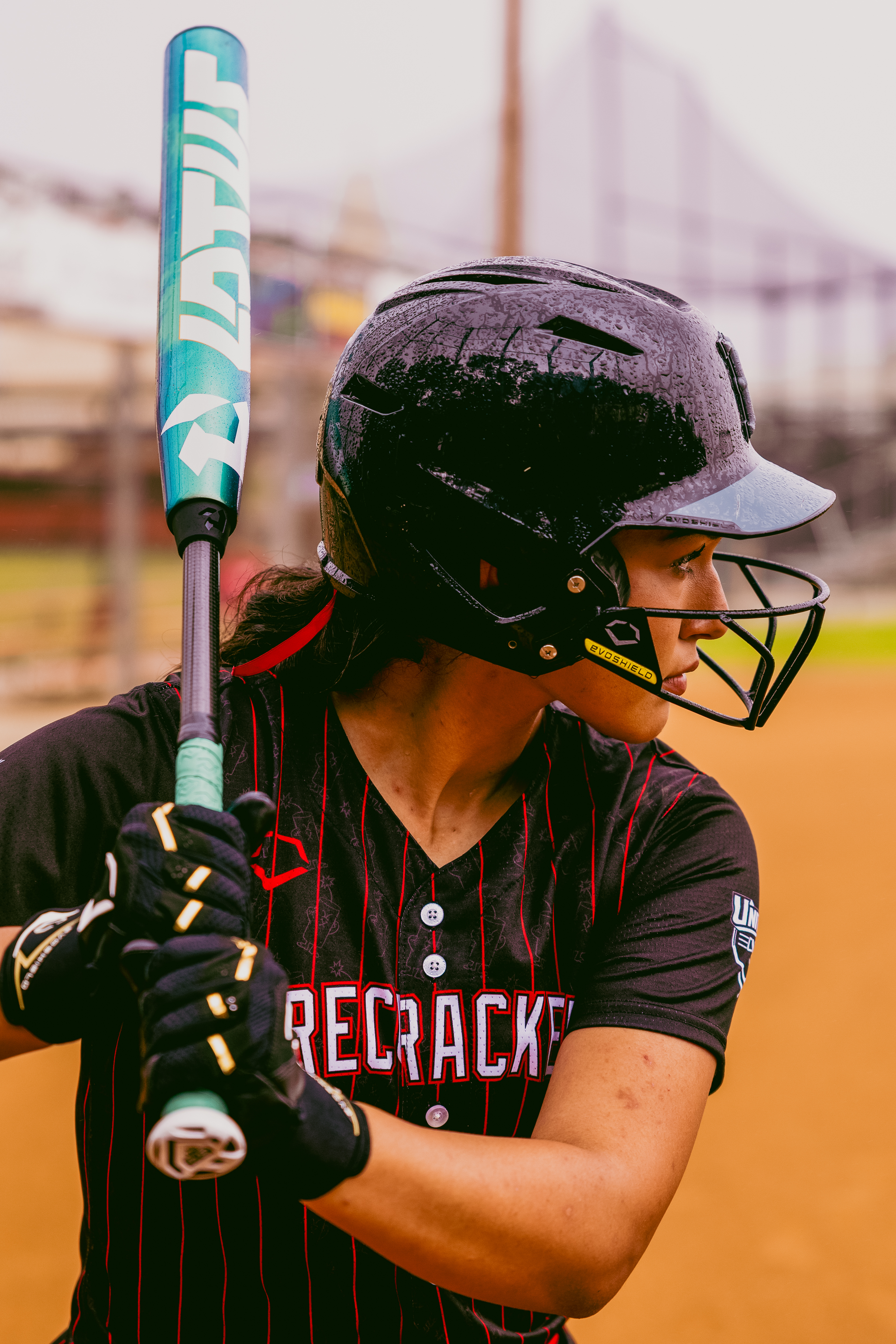
Fastpitch softball bats are specifically designed for fastpitch softball.
They should not be confused with:
- baseball bats
- slowpitch softball bats
- BBCOR bats
Fastpitch bats typically feature a 2 1/4" barrel and are available in a wide range of lengths and drops to accommodate players of different ages and levels.
Before purchasing any bat for competition, always check the rules of your league, federation or tournament.
Different organizations may require specific certification marks or maintain lists of approved and non-approved bats. For example, WBSC competition rules require an approved bat meeting WBSC standards, while USSSA-sanctioned fastpitch play has its own certification requirements.
→ SHOP FASTPITCH SOFTBALL BATS
2. What Does Drop Mean on a Fastpitch Bat?
The drop is the difference between the bat's length in inches and its weight in ounces.
The formula is simple:
Bat Length – Bat Weight = Drop
For example:
30" bat weighing 20 oz = -10
32" bat weighing 22 oz = -10
33" bat weighing 24 oz = -9
The larger the negative number, the lighter the bat is relative to its length.
For example, if we compare three 32" bats:
| Bat | Weight |
|---|---|
| 32" -11 | 21 oz |
| 32" -10 | 22 oz |
| 32" -9 | 23 oz |
So a -11 is lighter than a -10, while a -9 is heavier.
3. What Are the Most Common Fastpitch Bat Drops?
Fastpitch bats are commonly available in drops such as:
-13 and -12
Very lightweight bats designed primarily for younger or smaller players.
They can help young hitters generate bat speed while learning proper swing mechanics.
-11
A popular lightweight option for youth fastpitch players.
It provides a good combination of length and manageable weight.
-10
One of the most common and versatile fastpitch bat drops.
It is widely used by youth and developing players and provides a balance between bat speed and barrel mass.
-9
A heavier option for stronger and more experienced hitters who can maintain good bat speed with additional weight.
-8
Typically suited to stronger, advanced players who prefer more mass through the hitting zone.
There is no single "best" drop. The right choice depends on the player's strength, swing speed and ability to control the barrel.
4. Fastpitch Softball Bat Length Chart
The player's height is a useful starting point when choosing bat length.
| Player Height | Approximate Bat Length |
|---|---|
| Under 120 cm | 24"–27" |
| 120–130 cm | 26"–28" |
| 130–140 cm | 27"–29" |
| 140–150 cm | 28"–30" |
| 150–160 cm | 29"–31" |
| 160–170 cm | 30"–32" |
| 170–180 cm | 31"–33" |
| 180+ cm | 32"–34" |
This chart should be treated as a starting point rather than a strict rule.
The player's weight, strength, experience and preferred bat drop should also be considered.
A taller player doesn't automatically need the longest available bat if the additional length makes the bat difficult to control.
5. Fastpitch Softball Bat Size by Age
Age can provide another useful starting point.
| Age | Approximate Bat Length |
|---|---|
| 5–7 | 24"–27" |
| 8–9 | 26"–29" |
| 10–11 | 28"–30" |
| 12–13 | 29"–32" |
| 14–15 | 31"–33" |
| 16+ | 32"–34" |
Again, age alone should never determine bat size.
Two 13-year-old players may have completely different height, weight, strength and swing mechanics.
6. How to Measure for the Right Fastpitch Bat Length
You can also use a simple physical measurement as a general check.
Arm Measurement
- Stand upright with one arm extended straight to the side.
- Measure from the center of your chest to the tip of your fingers.
- Compare the measurement with available bat lengths.
Standing Bat Check
Place the knob of the bat against the center of your chest and extend the bat along your arm.
If you can comfortably reach toward the end of the bat without overstretching, the length may be appropriate as a starting point.
Remember that these methods only help estimate length.
They don't tell you whether the bat is too heavy for the player.
7. Choosing the Right Combination of Length and Drop
Length and drop should always be considered together.
For example, moving from:
30" -10 → 31" -10
doesn't only make the bat one inch longer. It also increases the weight from 20 oz to 21 oz.
Moving from:
31" -10 → 31" -9
keeps the same length but increases the weight from 21 oz to 22 oz.
And moving from:
31" -10 → 32" -9
increases both length and weight – from 21 oz to 23 oz.
That can create a significant difference in how the bat feels.
When sizing up, it isn't always necessary to increase both length and weight at the same time.
8. Don't Choose a Bat That's Too Heavy
One of the most common mistakes when buying a youth fastpitch bat is choosing something too large or heavy because the player will "grow into it."
A bat that is too heavy can negatively affect:
- bat speed
- barrel control
- timing
- swing path
- mechanics
- confidence at the plate
A hitter should be able to accelerate the barrel through the hitting zone and repeat the swing without excessive effort.
A heavier bat doesn't automatically produce more power.
The best results come from combining sufficient barrel mass with good bat speed and control.
9. How to Tell if a Fastpitch Bat Is Too Heavy
Watch the player swing.
Signs that the bat may be too heavy include:
- the barrel dropping during the swing
- difficulty getting the bat through the hitting zone
- consistently late contact
- poor barrel control
- shortened or altered swing mechanics
- noticeably slower swing speed
You can also ask the player to hold the bat straight out with one hand near the knob for a short period.
If they struggle to keep the barrel relatively steady, the bat may be too heavy.
This is only a rough test – actual swing quality is much more important.
10. Balanced vs End-Loaded Fastpitch Bats
Two fastpitch bats with exactly the same length and weight can feel surprisingly different.
This is because of swing weight – how the bat's mass is distributed.
Balanced Bats
Balanced bats distribute their weight more evenly.
They generally provide:
- easier barrel control
- faster-feeling swings
- better maneuverability
Balanced bats are popular with contact hitters and players who prioritize bat speed and control.
They can also be a good choice for younger players moving into longer bats.
End-Loaded Bats
End-loaded bats place more mass toward the barrel.
This creates a heavier swing feel and can provide additional momentum through contact.
They are generally better suited to stronger, experienced hitters who can maintain good bat speed.
Slightly End-Loaded Bats
Many performance fastpitch bats fall somewhere between the two.
They provide some additional barrel mass without feeling as demanding as a heavily end-loaded model.
11. Composite vs Alloy Fastpitch Bats
Material is another major consideration.
Composite Bats
Composite fastpitch bats are extremely popular at competitive levels.
Depending on the model, they can provide:
- optimized barrel performance
- large sweet spots
- reduced vibration
- sophisticated weight distribution
- a softer feel on contact
Composite construction also gives manufacturers significant control over how weight is distributed throughout the bat.
Some composite bats require a break-in period before reaching their intended performance.
Alloy / Aluminum Bats
Alloy bats typically offer:
- excellent durability
- little or no break-in
- immediate game-ready performance
- a more traditional metallic feel
They can be an excellent choice for younger players, training or players who prioritize durability.
Hybrid Bats
Hybrid bats combine different materials, for example an alloy barrel with a composite handle.
This allows manufacturers to combine characteristics of both materials.
12. One-Piece vs Two-Piece Fastpitch Bats
Construction also changes the way a bat feels.
One-Piece Bats
One-piece bats generally provide:
- a stiffer feel
- direct energy transfer
- immediate feedback at contact
They are often preferred by stronger hitters who like a solid connection between their hands and the barrel.
Two-Piece Bats
Two-piece bats use a connection between the handle and barrel.
Depending on the design, this can provide:
- more flex
- reduced vibration
- greater comfort on mishits
- a smoother feel through contact
Two-piece composite construction is very common among premium fastpitch bats.
Neither construction is automatically better. It depends on the hitter's preferences and swing.
13. What Is the Sweet Spot?
The sweet spot is the area of the barrel where contact produces the most efficient combination of performance and feel.
Premium fastpitch bats often use advanced barrel construction to create a larger or more forgiving hitting area.
However, a large sweet spot doesn't compensate for poor bat sizing.
A player will usually perform better with a properly sized bat they can control than with a premium bat that is too long or too heavy.
14. Do Composite Fastpitch Bats Need to Be Broken In?
Some composite fastpitch bats benefit from a break-in period.
This can involve gradually hitting balls while rotating the bat between swings to distribute contact around the barrel.
However, always follow the manufacturer's recommendations for the specific model.
Modern composite construction varies significantly, and not every bat requires the same break-in procedure.
Never use methods that aren't recommended by the manufacturer in an attempt to accelerate break-in or alter bat performance.
15. Do Fastpitch Bats Have Temperature Restrictions?
Some manufacturers provide minimum recommended temperatures for using composite bats.
Composite materials can become more vulnerable to damage in very cold conditions, particularly when hitting cold, dense softballs.
If you play or train outdoors during winter, always check the manufacturer's recommendations for your specific bat.
This is particularly relevant for European players training through colder months.
16. How Long Does a Fastpitch Bat Last?
There is no fixed lifespan.
Bat durability depends on:
- construction
- materials
- frequency of use
- number of hits
- ball type
- temperature
- player strength
- proper storage and care
Alloy bats may dent over time, while composite barrels can eventually develop cracks or structural damage.
Regularly inspect the bat for visible damage and unusual changes in sound or feel.
17. When Should a Player Move to a Heavier Bat?
There is no specific age when every fastpitch player should move to a heavier bat.
Consider moving from, for example, -11 to -10 or -10 to -9 when the player:
- controls the current bat easily
- maintains excellent bat speed
- has developed more strength
- can handle additional weight without changing swing mechanics
A gradual progression might look like:
-12 → -11 → -10 → -9 → -8
But there is no requirement for every player to follow this progression.
Many successful players remain with a -10 because it provides the combination of speed and control they prefer.
18. Should Power Hitters Use Heavier Bats?
Not automatically.
A stronger hitter may benefit from additional barrel mass, but only if they can maintain sufficient bat speed.
A lighter, balanced bat may actually produce better results for a player who can accelerate it more efficiently.
The goal is to find the best combination of:
bat speed + barrel control + mass + quality of contact.
Hitting style matters, but it shouldn't override proper sizing.
19. How Much Should You Spend on a Fastpitch Bat?
The most expensive bat isn't automatically the right bat.
Beginner / Young Player
Prioritize:
- correct length
- manageable weight
- comfortable swing
- durability
- correct certification
A properly sized entry-level bat is usually a much better choice than an expensive bat that the player struggles to swing.
Developing / Intermediate Player
As mechanics and strength develop, construction, balance and barrel performance become increasingly important.
This is often when higher-performance composite bats start to make sense.
Competitive / Advanced Player
Experienced players may benefit from premium bats optimized for:
- barrel performance
- swing weight
- vibration reduction
- feel
- construction
- individual hitting style
At this level, personal preference becomes particularly important.
Quick Fastpitch Softball Bat Buying Checklist
Before ordering your bat, check:
✓ Fastpitch – Is it specifically designed for fastpitch softball?
✓ Certification – Is the bat approved for your league or federation?
✓ Length – Is it appropriate for the player's height and reach?
✓ Drop – Can the player comfortably handle the weight?
✓ Swing Weight – Balanced or end-loaded?
✓ Material – Composite, alloy or hybrid?
✓ Construction – One-piece or two-piece?
✓ Level of Play – Beginner, developing or competitive?
✓ League Rules – Is this specific model permitted in your competition?
Always check your league or federation rules before purchasing a bat for competitive play.
Frequently Asked Questions About Fastpitch Softball Bats
What size fastpitch bat should I get?
The correct size depends on the player's height, weight, age, strength and experience.
Height and age charts are useful starting points, but the player should be able to swing the bat comfortably while maintaining good barrel control and mechanics.
What is the most common fastpitch bat drop?
-10 is one of the most common and versatile fastpitch bat drops.
However, younger players may prefer lighter -11 or -12 bats, while stronger hitters may choose -9 or -8.
What does -10 mean on a softball bat?
A -10 drop means the difference between the bat's length in inches and its weight in ounces is 10.
For example:
30" -10 = 20 oz
31" -10 = 21 oz
32" -10 = 22 oz
33" -10 = 23 oz
Is -11 lighter than -10?
Yes – when comparing bats of the same length.
For example:
32" -11 = 21 oz
32" -10 = 22 oz
The -11 is therefore one ounce lighter.
Is a -10 or -11 fastpitch bat better?
Neither is automatically better.
A -11 can provide additional bat speed and may suit younger or smaller players.
A -10 provides more mass while remaining relatively lightweight and is an extremely popular choice for developing fastpitch players.
Should I buy a longer fastpitch bat for my daughter to grow into?
Usually not.
A bat that is too long or heavy can make it difficult to control the barrel and may negatively affect swing mechanics.
Choose a bat the player can control effectively now.
Is a composite fastpitch bat better than an alloy bat?
Not necessarily.
Composite bats often offer sophisticated barrel designs, weight distribution and vibration reduction, while alloy bats provide excellent durability and require little or no break-in.
The best option depends on the player, budget and intended use.
Is a balanced or end-loaded fastpitch bat better?
Balanced bats are generally easier to control and can help generate bat speed.
End-loaded bats place more mass toward the barrel and are typically better suited to stronger hitters who can maintain good swing speed.
Neither is universally better.
Is a one-piece or two-piece fastpitch bat better?
It depends on personal preference.
One-piece bats generally feel stiffer and provide more direct feedback, while two-piece bats can reduce vibration and provide additional flex.
Can I use a baseball bat for fastpitch softball?
Generally, you should use a bat specifically designed and approved for fastpitch softball.
Baseball and fastpitch bats are built to different specifications and may be subject to completely different competition rules.
Can I use a slowpitch bat for fastpitch softball?
Don't assume that a slowpitch bat is legal or appropriate for fastpitch.
Use a bat designed for fastpitch and verify the certification required by your league or federation.
How do I know if my fastpitch bat is legal?
Check the certification markings on the bat and compare the specific model with the rules of your league, federation or tournament.
For WBSC competitions, only bats meeting WBSC standards and carrying the required approved marking may be used. WBSC also maintains an approved bat list.
USSSA similarly requires compliant fastpitch bats from licensed manufacturers with the appropriate permanent certification markings and maintains information on non-compliant models.
Still Not Sure Which Fastpitch Bat to Choose?
Choosing between different lengths, drops, materials and swing weights can be difficult – especially when buying a bat for a young player.
At BaseballOutlet, we offer fastpitch softball bats for different ages and levels of play – from lightweight youth bats to premium composite models for competitive players.
If you're unsure which bat to choose, contact us and tell us the player's age, height, approximate weight, level of play and the bat she currently uses (length and drop, if known). We'll be happy to help you find the right model.
 Log in with Facebook
 Log in with Google